

Your bank's format isn't recognised. That's normal, especially outside the US.

Orby ships knowing how to read a handful of American banks out of the box. If you're anywhere else, or your bank simply isn't one of the ones we started with, your first statement will not be recognised. That's not a sign anything is broken. It's the actual, current state of things, and this page is what to do about it.
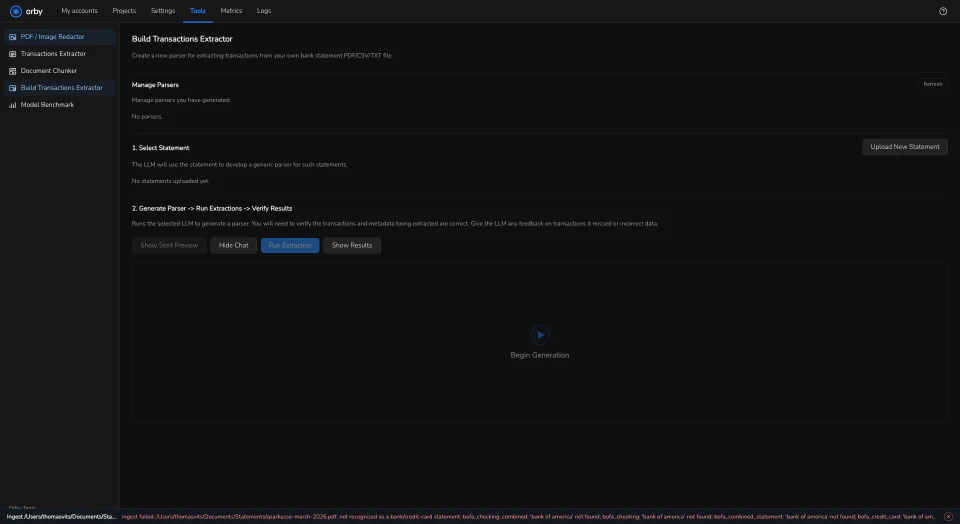
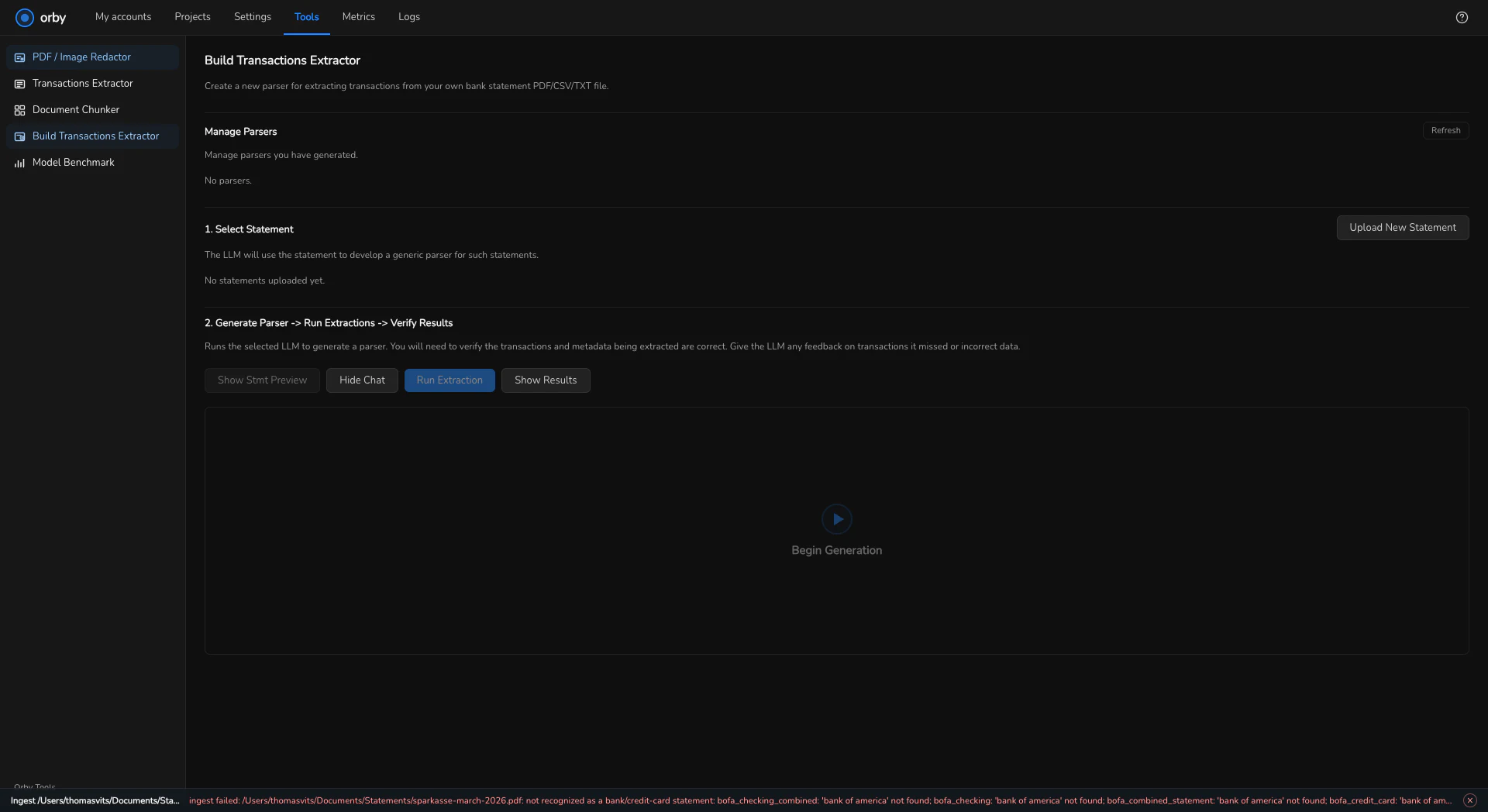
The real not-recognized error, listing every parser that declined and why.
What you'll actually see. Specific, not a generic "unsupported file" message.

The error you'll get, and why it's actually useful

When Orby doesn't recognise a statement, it tells you exactly why, listing every format it tried and the specific reason each one didn't match. It's not a generic "unsupported file" message. You'll be able to see, for example, that it looked for "Bank of America" or "Chase" in your document and didn't find either.

What to do next

Option 1 — Tell us, and we'll add it

This is the one we'd suggest for most people testing right now.

Go to Tell us it got something wrong and tell us your bank's name and country. If you're comfortable using the built-in PDF Redactor first to black out your account number and name, attach the redacted statement too, it helps us build support faster. If you'd rather not attach anything, a description of the format is still useful.

This is exactly how we've added every bank so far, including formats well outside the US. It's slower than doing it yourself in the app, but nothing about your original, unredacted statement needs to go anywhere for us to help.

Option 2 — Let Orby build it for you, automatically

Orby has a built-in tool that can write support for a new bank format itself, using a more capable model as help. It's fast, and for some testers it will be the right choice.

Measured, today

Before you use it, know exactly what it does. Building a parser this way sends your entire statement, unredacted, account number and all, to whichever model you've configured as your Untrusted Supporting Model in Settings. This is not a redacted copy. It's the full document. We cover why, and what we're doing about it, on What happens to your data.

This uses whichever model you've set as your Untrusted Supporting Model. We haven't confirmed what happens if you try this with none set at all, so don't treat leaving it unset as a safe way to use this option. If you want this to be safe, use Option 1 or Option 3 instead.

Option 3 — Write your own parser

If you're comfortable with Python and would rather not send anything anywhere, you can write the parser yourself, entirely on your own machine. This isn't a contribution you submit and wait on: drop the finished file into place and it works immediately, on your machine, with no pull request, no code review and no release to wait for.

Read the guide → (guide not published yet)

If you try one of these and it still doesn't work, that's useful information on its own. Tell us what happened →